
Shade for Santa Clarita Valley backyards
Patio Covers in Santa Clarita, CA
Aluminum, wood, pergolas and louvered roofs, sized to city setbacks and built with the fire zone and Santa Ana winds in mind.
- Free on-site estimates
- Written, itemized quotes before any work
- Setbacks, height and fire zone rules checked before design
Shade That Holds Up to Heat, Wind and Fire Season
Patio covers in Santa Clarita have three jobs: block a hard summer sun, stay put when the Santa Ana winds come through, and meet the construction rules for a valley where much of the land is mapped as fire hazard zone. Summer highs here average 90 to 95 degrees and often pass 110 during heat waves; the valley hit a record 118 degrees on July 5, 2024. An uncovered concrete patio facing south or west can be unusable from June to October. A well-planned cover changes that, and it also shades the back wall and windows of the house.
Choosing a material
Aluminum and wood are the two main materials. Aluminum covers, including embossed woodgrain styles such as Alumawood, do not rot or need staining and come in solid, lattice and insulated versions. Wood covers can be built to almost any design, but they need sealing or paint and, in many fire zones, larger timbers or treated lumber. Pergolas give partial shade with an open beam-and-rafter top. Louvered roof systems use motorized or manual aluminum blades you can open for light or close for shade and rain. Lattice and shade covers are the lighter-cost option when you want filtered shade rather than a solid roof.
What the city's standard drawings say
The City of Santa Clarita Building & Safety Division publishes standard drawings for both shade bar patio covers and roofed patio covers. They set a minimum 5-foot setback to side and rear property lines and 20 feet to the front property line when the cover is in the front yard, measured to the posts. When those setbacks are met, Planning Division approval is not needed. The roofed-cover sheet limits height to 12 feet above grade, requires a Class B or better roof covering, and calls for three inspections: after the footings are dug, after framing, and at final. The shade bar sheet requires the bars to be at least 50% open and says they may not be covered with roofing. Covers are for outdoor living only; the city does not allow them to be used as carports, storage rooms or living space. These sheets are older, so we confirm the current requirements with the city for every project.
Building in a fire hazard zone
When CAL FIRE released its updated local fire hazard maps for Los Angeles County in March 2025, LA County Fire described a significant increase in fire zone areas for Santa Clarita, and The Signal reported that most of the valley now falls in high fire hazard severity zones. Los Angeles County's notes for very high fire hazard severity zones list patio covers, trellises, arbors and gazebos among the structures that must be built with ignition resistance, and structures within 50 feet of the house generally need noncombustible or ignition-resistant materials. Paint and stain do not count as protection. In practice that points many homeowners toward aluminum, or toward wood framing in heavy timber sizes or fire-retardant-treated lumber. The city's own drawings warn that the standard details may not meet fire zone requirements, so we check your parcel and build to the rules that apply there.
Wind, slopes and footings
Santa Ana winds blow down from the Mojave Desert, mostly in fall, and often exceed 40 miles per hour, with damage common in the Santa Clara River basin and through Newhall Pass. A patio cover is a large flat surface, so post size, footing size and the connection to the house matter more than the finish. The city's standard sizes footings by the shaded area each post supports, and its plot plan asks for any hillside steeper than 3 to 1 near the cover. A lot that backs onto a slope can change where posts can go.
HOA approval
Much of the valley was built as planned communities. Valencia was first planned in the 1960s by the Newhall Land and Farming Company, with its first subdivision opening in 1967, and builders such as Lennar, Tri Pointe Homes and KB Home have built newer developments in the area. Many of these homes are in homeowners associations with architectural rules on color, height and materials. We give you drawings and material specifications you can submit to your HOA before the city permit.
What a typical project includes
- An on-site visit to measure, check setbacks and note slopes, pools and trees
- A choice of attached or freestanding design and roof type
- A written, itemized quote with materials, footings and permit handling
- Drawings for the city and, if needed, your HOA
- Footing excavation and inspection before concrete
- Framing, roof or shade installation, and final inspection
- Clean-up and haul-away when the work is done
Common Questions
How much is a custom patio cover?
Published national guides vary widely: Fixr puts covered patios at about $4,000 to $12,000 on average, or roughly $25 to $40 per square foot for most projects, while Thumbtack's install average runs $842 to $4,053 for simpler covers. Aluminum runs about $20 to $70 per square foot and wood about $15 to $35 per square foot in Fixr's figures. Size, roof type, fire zone requirements and footings drive the price, and your written estimate sets it.
Do you need a permit to build a patio cover in California?
In Santa Clarita, yes. The city's Building & Safety Division issues patio cover permits from its standard drawings or from full plans for custom designs, with inspections at the footings and at final (plus framing for roofed covers). Unincorporated areas such as Stevenson Ranch and Castaic go through Los Angeles County. We handle the permit as part of the job.
What is the difference between a patio cover and a gazebo?
A patio cover is usually attached to the house or set beside it to shade an existing patio, and it is open on the sides. A gazebo is a freestanding, roofed structure, often with its own floor, set out in the yard. Both are accessory structures, so setbacks and fire zone rules apply to either one.
Is a patio cover worth it?
In a valley where summer highs often pass 110 degrees, a cover can turn a patio that sits empty for months into usable space, and shading the back wall and windows can cut the heat entering the house. Whether it is worth it for you depends on how you use the yard, the direction the patio faces and your budget. We can show you options at several price points at the estimate.
What patio cover material is best for fire zones?
Los Angeles County's fire zone notes require patio covers near the house to be built with noncombustible or ignition-resistant materials, and they say paint or stain does not count as protection. Aluminum covers meet that easily. Wood can work when it is heavy timber or fire-retardant-treated lumber; we check what your parcel requires before you choose.
Will an aluminum patio cover stand up to Santa Ana winds?
A properly engineered aluminum cover with the right post spacing, footings and attachment handles normal wind loads. Failures on older covers usually come from undersized posts, rotted ledgers or loose fasteners rather than the roof panels. We size footings to the shaded area each post supports and fasten the cover to solid framing.
Do I need HOA approval for a patio cover?
If your home is in a homeowners association, almost certainly. In many Valencia villages, associations oversee the quality and upkeep of housing, and associations often set rules on height, color and materials. We provide drawings and material specs for your HOA submission, and we wait for approval before applying for the city permit.
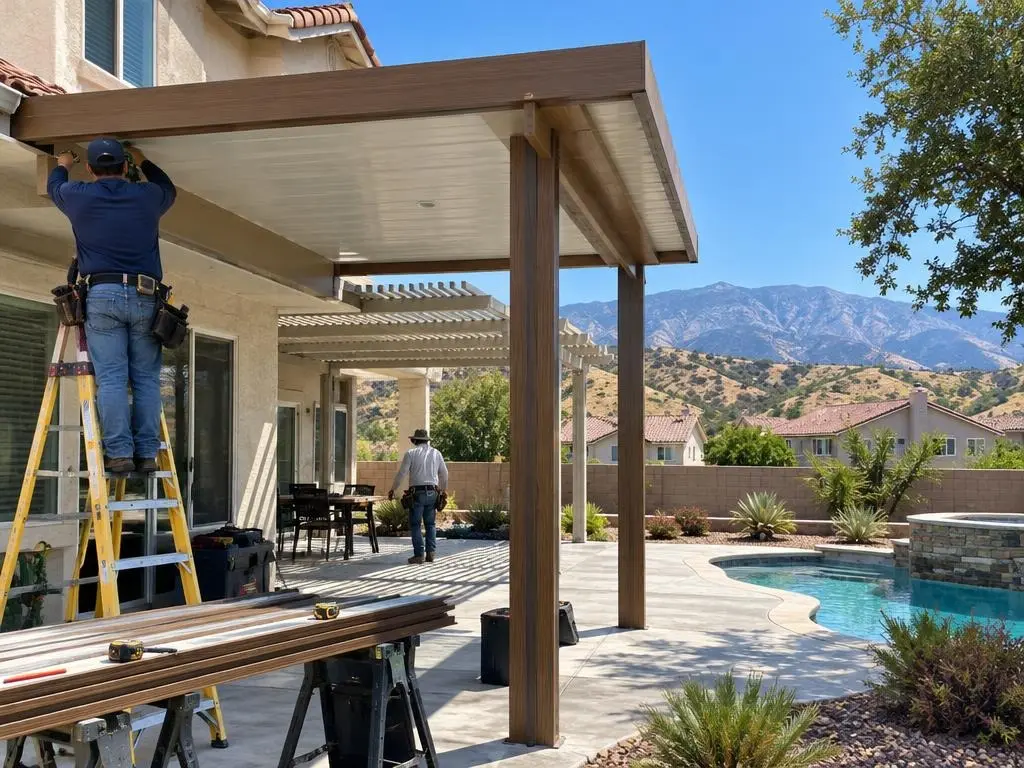
Our Patio Cover Services
Six services cover new shade structures and the repair of old ones, from solid aluminum roofs to open pergolas.
Aluminum Patio Covers
Solid, lattice and insulated aluminum covers, including woodgrain styles, that do not rot or need staining.
Learn more →Wood Patio Covers
Custom-framed wood covers with solid or open roofs, sized for fire zone rules and sealed against the sun.
Learn more →Pergolas
Freestanding and attached pergolas in aluminum, vinyl or wood, with optional shade, lattice or solid tops.
Learn more →Louvered Roof Systems
Adjustable aluminum louvers that open for sun and close for shade or rain, manual or motorized.
Learn more →Lattice & Shade Covers
Open lattice tops and fabric shade that filter sun and keep air moving, at a lower cost than a solid roof.
Learn more →Patio Cover Repair & Replacement
Fixing sagging beams, rotted posts, loose ledgers and wind damage, or replacing a cover that is past saving.
Learn more →Where We Work
Santa Clarita is home base: Valencia, Saugus, Newhall and Canyon Country, plus nearby Stevenson Ranch, Castaic, Val Verde and Agua Dulce. Neighborhoods in Saugus and Canyon Country range from developments of the 1960s or earlier to 21st-century tracts, so projects range from repairing an older cover to shading a bare new slab, and many Valencia villages have homeowners associations. Areas inside the city follow the City of Santa Clarita's permit process; unincorporated communities such as Stevenson Ranch, Castaic and Agua Dulce go through Los Angeles County. Each area page covers what applies there.
- Patio Covers in Santa Clarita, CA
- Patio Covers in Valencia, CA
- Patio Covers in Saugus, CA
- Patio Covers in Canyon Country, CA
- Patio Covers in Newhall, CA
- Patio Covers in Stevenson Ranch, CA
- Patio Covers in Castaic, CA
- Patio Covers in Agua Dulce, CA
- Patio Covers in Acton, CA
- Patio Covers in Palmdale, CA
- Patio Covers in Lancaster, CA
- Patio Covers in Porter Ranch, CA
- Patio Covers in Granada Hills, CA
- Patio Covers in Northridge, CA
- Patio Covers in Sylmar, CA
- Patio Covers in Chatsworth, CA
- Patio Covers in Simi Valley, CA
- Patio Covers in Val Verde, CA
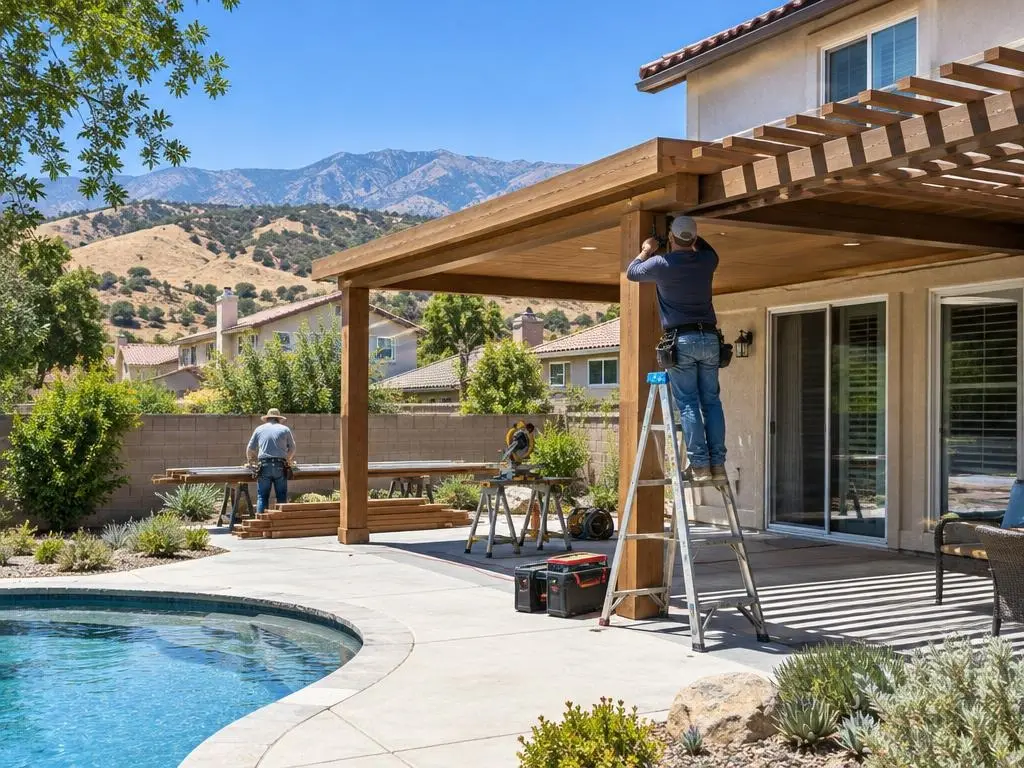
Why Homeowners Call Patio Covers Santa Clarita
Setbacks checked first
We measure distances to property lines and note slopes before designing, so the cover fits city rules from the start.
Fire zone materials
We check whether your parcel is in a fire hazard zone and show you materials that meet the ignition-resistance rules for it.
Built for wind
Post sizes, footings and house connections are planned for Santa Ana gusts, not just for looks.
One written price
Your quote lists size, materials, footings, permits and price. Nothing is added without your written approval.
Get a Patio Covers Estimate
Free on-site estimates across Santa Clarita and the valley.